Laura Stanton
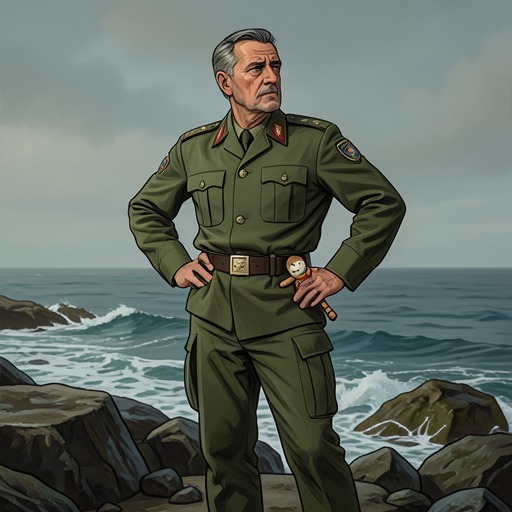
Young Captain Jack · The Son of a SoldierLaura Stanton is a largely absent but decisive figure in the novel: the wife of Colonel Stanton, the mother of Jack, and the woman whose death after the Nautilus shipwreck leaves behind the physical evidence that eventually restores a broken family. Though she never appears alive in the present-day action, her name, marriage, child, clothing, handkerchief, and wedding ring form a chain of clues through which Jack’s identity is recovered and Colonel Stanton’s lost past is made legible.
Marriage, Motherhood, and the Shipwreck
Laura’s known history is inseparable from the disastrous ocean voyage that Colonel Stanton later describes. During that voyage, the ship went down, and Colonel Stanton believed that his wife and child had been lost with all on board. He remembered the catastrophe as a total destruction of his family, while the actual fate of Laura and Jack was different: a lady and her child were washed ashore on the coast. Laura had been badly injured by wreckage and died two days later, but Jack survived.
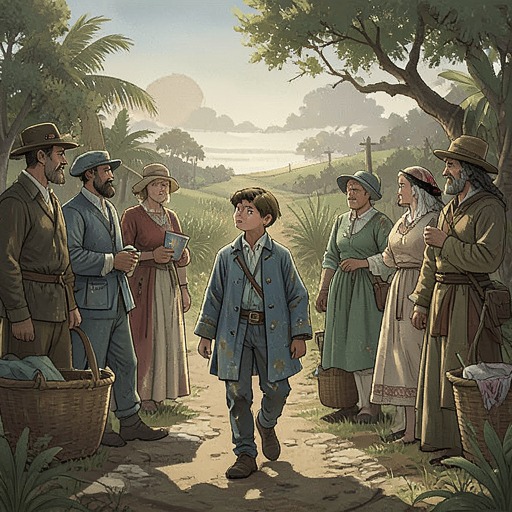
The rescue occurred near Hemlock Bluff rocks, where Old Ben heard a cry of pain and found Laura on the beach with the young Jack in her arms. The child was exposed to the storm and nearly died, and Old Ben carried both mother and son to the boathouse before seeking help from the Ruthven household. Laura therefore becomes the hidden center of two family histories at once: she is the mother from whom Jack was separated by disaster, and the dying stranger whose arrival led to his adoption by the Ruthven family.
The Evidence She Leaves Behind
Laura cannot identify herself before her death. Her clothing is unmarked, and the only object found in her pocket is a delicate lace handkerchief, also unmarked. Mrs. Ruthven preserves the handkerchief together with Laura’s clothing, treating these remnants as a record of a woman whose name and origin could not otherwise be established. A ring from one of Laura’s fingers is also kept. It once carried an inscription, but the marking has been worn away so thoroughly that neither of the two jewelers who examined it could read it.
The ring initially offers only possibility rather than proof. Jack recognizes it as resembling a wedding ring, but its worn marking cannot immediately disclose Laura’s marriage or connect him to Colonel Stanton. Its significance changes when Mrs. Ruthven later brings the clothing, handkerchief, and ring to the wounded colonel. Colonel Stanton recognizes them as belonging to his wife Laura and identifies the child’s clothing as Jack’s. In that moment, objects preserved as unexplained relics become direct evidence of a marriage, a motherhood, and a shipwrecked family.
Memory, Fever, and Recognition
Laura’s name returns first through Colonel Stanton’s fevered speech. While recovering from his wounds, he mutters about a doomed ship, towering waves, his wife Laura, and a child named Jack. He pleads that Laura and the child be saved and speaks as though the shipwreck and the war surrounding him have merged into one traumatic scene. Mrs. Ruthven recognizes that these words may refer to the same wreck in which Jack was found, and the resemblance between Colonel Stanton and Jack intensifies her suspicion.
When Colonel Stanton becomes lucid enough to recount the past, he says that the ocean voyage was disastrous to him and his family and that the ship struck somewhere along the coast. He had been separated from Laura and Jack and later found himself clinging to a spar far out at sea. Because he believed them drowned, he had spent years without knowing that Laura had reached land or that their son was still alive. His memory is therefore incomplete but not useless: the fever repeats the lost scene in fragments, while the surviving objects and Mrs. Ruthven’s testimony supply the external confirmation.
The Link to Jack’s Identity and Fortune
Laura’s death does not end her narrative importance. Her relationship to Jack becomes the basis for correcting several competing accounts of his parentage. Jack had been told that he was a nobody who did not belong to the Ruthven family; Marion explains that the Ruthvens adopted him when he was three or four years old. Dr. Mackey later claims that Jack is his son, but that claim is exposed as false. Mrs. Ruthven finally tells Jack that he is Colonel Stanton’s son, a conclusion Colonel Stanton has proved beyond reasonable doubt through his memories and recognition of Laura’s belongings.
Laura’s history also carries financial consequences. Colonel Stanton explains that property in England was coming to him and that an estate in Virginia was due to Laura. The voyage had been undertaken to obtain the property associated with her, giving her death and Jack’s disappearance a direct connection to inheritance. Dr. Mackey learned the details of Colonel Stanton’s past while exploiting his confinement in an asylum, drugged him, and used the stolen knowledge in an attempt to control Jack and the fortune attached to the Stanton family. Laura is thus not merely the lost mother in an emotional revelation; her marriage and inheritance rights make her identity part of the material stakes of the plot.
Narrative Significance and Aftermath
Laura functions as the novel’s absent origin point. The wreck, the unidentified body, the child’s half-remembered storm, the lace handkerchief, and the worn wedding ring all begin as disconnected signs. Their meaning is gradually revised: first Laura is an unnamed woman, then Jack’s mother, then Colonel Stanton’s wife, and finally the key to Jack’s restoration as Colonel Stanton’s son. The story repeatedly delays her identification, but each return to the same evidence narrows the possibilities rather than merely renewing suspense.
Her memory also separates genuine loss from deliberate imposture. Colonel Stanton’s grief concerns a wife and child he thought dead, whereas Dr. Mackey treats the same history as information to be exploited. The contrast gives Laura’s remnants an ethical force: preserved clothing and jewelry help reunite a father and son, while stolen testimony and concealed knowledge are used to pursue property. After the outlaws’ camp is searched, the black tin box taken from the Nautilus wreck is recovered and its papers are returned to Colonel Stanton. Those papers finally remove the remaining obstacle between him, Jack, and the fortune, completing the chain of recovery that began with Laura’s rescue from the sea and ended with her family’s recognition.